

An important new bill was recently proposed by Senator Steve Glazer (D-Orinda) in California, SB 1305, which would make it legal for first responders to give mouth-to-snout resuscitation to animals during rescue efforts. SB 1305 is co-authored by Assembly members Catharine Baker, R-Dublin; Sabrina Cervantes, D-Riverside; Kevin Mullin, D-South San Francisco; and Marc Steinorth, R-Rancho Cucamonga.
Mouth-to-Snout Resuscitation Would be Legal Under New Pet Rescue Bill
SACRAMENTO – First responders would be able to apply mouth-to-snout emergency care for Fido, Sparky, Fifi, Tigger, or Rover – or any dog or cat under duress – without fear that their heroic efforts would be met with legal action under a bill Sen. Steve Glazer (D-Orinda) introduced in February 2018.
Under the bill, SB 1305, neither first responders nor their employers would be liable for civil damages or criminal prosecution if they provided pre-veterinary emergency care to an injured dog or cat at the scene of an emergency. Waiting until the pets are taken to a veterinary care facility could be the difference between life and death.
“Any first responder who puts mouth to snout to save a poor pooch’s or kitty’s life deserves only high praise and encouragement,” Glazer said. “Our pets are so important to us, that we all would appreciate any effort to save them in an emergency. We should reward, not punish, those who protect our pets.”
SB 1305 is co-authored by Assembly members Catharine Baker, R-Dublin; Sabrina Cervantes, D-Riverside; Kevin Mullin, D-South San Francisco; and Marc Steinorth, R-Rancho Cucamonga.
Veterinarian Jay Kerr, who came to Sen. Glazer with the bill idea, said that, with this bill, “pets are more likely to receive the critical emergency medical services that might allow them to reach the veterinarian for whatever care they require.”And, as a director on the San Ramon Valley Fire District Board, Kerr said he knows “that most first responders WANT to provide Emergency Medical Services to the dogs and cats they encounter in emergencies. This legislation will allow them to provide these services legally!”
It is currently unlawful for any person to practice veterinary medicine in California unless they are a licensed veterinarian. Firefighters and paramedics are not permitted to provide basic first aid to dogs and cats that are rescued from house fires or other emergencies.
Any person who violates the current law is guilty of a misdemeanor punishable by a fine of $500 to $2,000, or by imprisonment in a county jail for up to one year, or by both a fine and imprisonment.
Because first responders are hesitant to provide assistance due to liability for civil damages, criminal prosecution, or professional disciplinary action, this bill is necessary to protect our good Samaritans.
The bill, however, does not require first responders to treat animals. If emergency medical services providers choose to provide medical stabilization to a dog or cat, they can administer services like opening and manually maintaining an airway, giving mouth-to-snout or mouth-to-barrier ventilation, managing ventilation by mask, controlling hemorrhage with direct pressure, immobilizing fractures, bandaging, and administrating naloxone hydrochloride, a drug that gets used often for our police K-9 dogs.
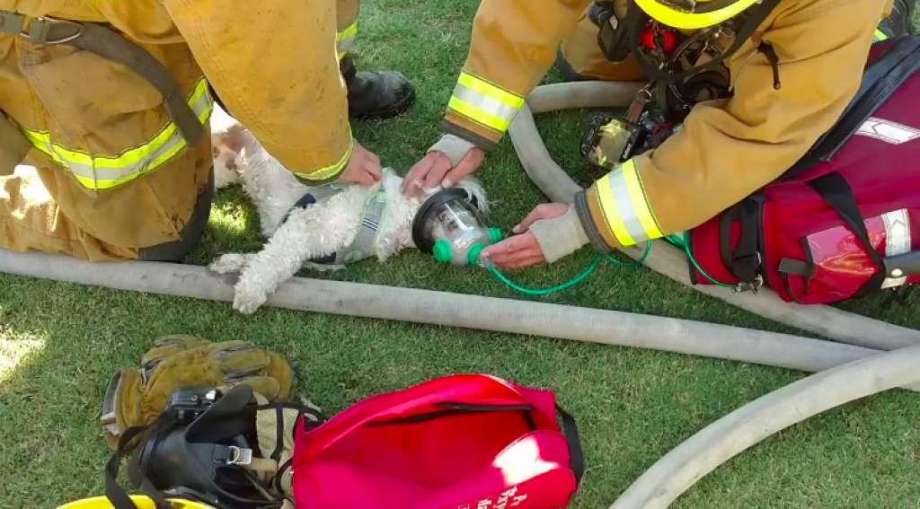
Image Copyright: 2018 SFGate, owned by Hearst Newspapers Corporation